Showing posts with label general. Show all posts
Showing posts with label general. Show all posts
Saturday, January 19, 2019

Thursday, September 17, 2015
Redirecting or mirroring in Indonesia
Good News for Indonesian!
Starting from today, anyone who resident in Indonesia area can access http://2r-he.blogspot.com (or http://blog.rosesana.com) more faster. Why?
Cause blogger redirecting http://2r-he.blogspot.com to http://2r-he.blogspot.co.id

Starting from today, anyone who resident in Indonesia area can access http://2r-he.blogspot.com (or http://blog.rosesana.com) more faster. Why?
Cause blogger redirecting http://2r-he.blogspot.com to http://2r-he.blogspot.co.id


Saturday, April 18, 2015
Personnel tracking / employee tracking
Personnel tracking: Real Time Location System approaching by RFID technology Application
For industry / factory, Hybrid RFID tags, each with a unique ID, mounted on a helmet or employee identity card . Because the helmet / identity card must be worn at all times when on the job site, the tag automatically carried around by workers at all times as well.
Personal warning system to prevent unauthorized access to areas that are not permitted or to dangerous areas of the plant, monitored, avoiding accidents caused by workers who inadvertently.
When a worker was trying to enter the danger zone, the reader at the entrance zone to detect the presence of tag identification card / helmet. The buzzer will emit a loud enough sound to warn workers. Operators at the site office will also be informed by a warning message is displayed on the PC or LED display.

The Real-time location tracking System (RTLS)
Hybrid RFID system provides real time location tracking of workers in different zones of the sites monitored, providing information to the central office to improve the management staff.
Active readers installed at the entrance to the place. The presence of workers is recorded automatically when workers walked through the entrance and into another place. Manual system for entry and exit is not needed anymore, the overall efficiency and improved accuracy.
Setting two readers to distinguish workers' entry or exit from the room.
Location tracking in monitored zone
Hybrid RFID systems have read range of up to a radius of a few tens of meters. Readers are installed in various zones for full coverage of the monitored sites. When workers walked along the site, readers still detect a signal from the tag. The signal is sent to the central office every second, perform real time location tracking function for all workers.
The management staff at headquarters
Readers installed at the entrance to detect the entry of workers to certain zones. When workers are in the zone, PC / LED display shows the central office of each worker information, including name, ID number, registration data and other useful information. The head office can more closely monitor the allocation of workers for each zone more efficient, on the PC in real time.

The benefits of personnel tracking :
- Ensure the safety of workers at the site
- management staff / workers better
- Efficiency and labor productivity higher
- Operational groove with high visibility
- Human error is reduced compared to manual recording system
- Increased utilization of the ability of workers
- Better planning and optimal use of resources
- Warning System for more accurate personal
Wednesday, April 15, 2015
RFID Application: Automatic Vehicle Identification in gas refueling station.
RFID Application: Automatic Vehicle Identification for auto payment in gas refueling station.

Gas for vehicles, also known as CNG (Compressed Natural Gas) or Compressed Natural Gas obtained through the compression process of methane (CH4) the extraction of natural gas with a pressure of 200 s / d 275 BAR. The composition of methane (CH4) which has a fraction lighter than air, making CNG will be released into the air at once, when the leak so relatih safer than the fuel oil.
The use of CNG as fuel, much cleaner and friendlier to the environment than the fuel oil, this is due to CNG produces fewer emissions compared with Fuel (1/3 fuel emission levels), in addition to the content of octane (RON - Research Octane Number) of 120, CNG is also able to produce cleaner burning, so that the vehicle's engine is more durable with an efficient treatment.
Vehicles usually wear converter kit which can be fueled by hybrid with manual shift or automatic use CNG or gasoline.
RFID application this time is to automatically detect vehicles that will fill CNG and process the data on the database server and issue invoices bills on the company or individual.
Tag used to be relatively low cost because of this tag will be affixed to the vehicle, the driver's windshield, usually kind of windshield sticker or variants commonly used for this, with a note to avoid glass films containing metal concentrates.
The type of reader that is used on the entrance gate is a type of long range with installation following the standards and degree following the hardware datasheet, so the best position to be obtained at its optimum performance.

The process is as follows:
• Vehicle(s) enter Gas refueling station through the entrance or gate where fitted Long range RFID reader
• Long Range RFID reader reads the information on the tag affixed to the windshield of the vehicle (vehicle Automatic Identification)
• Long Range RFID reader informs the server and this information also displayed on the island monitor(s) SPBG
• Refueling Officer, choose the display monitor vehicle license plates number that appear and perform charging by the number of customers who have been determined
• Finish filling, all the information is sent to the server and published a letter printed for billing to the company or paid directly.
Tags can also contain micro money or points which can also be used for payment with a prepaid system for example, so that the refueling process faster, by directly cutting the contents of micro money or point on the tag.
Another innovation is still a lot of open and developed for applications of this kind.

The advantage of this system:
• The process is more accurate vehicle administration, particularly for public transport company (taxi / bus) which requires the calculation of fuel consumption (cost) and earned income.
• refueling process becomes more effective and accurate.
• Financial transactions electronically, it is faster and more positive side
Thursday, January 08, 2015

Saturday, January 03, 2015

Monday, December 08, 2014
Join to BBM Channel : C00442378

Chat with rosesana.com , get more advantages to the hardware discount and promotions.
Wednesday, September 03, 2014
Information Technology Simple knowledge base
AES - Advanced Encryption Standard (AES) specifies the FIPS approved cryptographic algorithm that can be used to protect electronic data.
API - An Application Programming Interface (API) is a set of procedure calls that an operating system, library or service provides to support requests made by computer programs.
Asymmetric key - A form of cryptography in which the key used to encrypt a message differs from the key used to decrypt it. It actually means Public-key cryptography.

Baud Rate - A baud rate is the measurement of the data transmission between computers and other devices.
CCID - CCID stands for Chip/Smart Card Interface Devices. Chip Card Interface Device (CCID) specification is an approach to smart card reader communication and it defines a standard communication protocol for smart card readers that connect to a computer via USB, allowing the same host-side driver to communicate with any CCID-compliant smart card reader.
CE - CE is a European standard according to which marking is mandatory for certain product groups to indicate conformity with the essential health and safety requirements set out in European Directives.
CSP - Cryptographic Service Provider (CSP) is a software library that implements the Cryptographic Application Programming Interface (CAPI). CSPs implement encoding and decoding functions, which computer's application programs may use.
Certificate authority - A certificate authority (CA) is an authority in a network that issues and manages security credentials and public key for message encryption.
Certificate revocation list - In PKI, Certificate Revocation List (CRL) is a list of serial numbers for certificates which are no longer valid.
Challenge and Response - Challenge and Response authentication includes a group of protocols in which one party asks question ("Challenge") and the other party has to provide valid answer ("Response") for authentication.
Contact Connector - Smart card connector having a special spring switch to detect full insertion of a smart card with small deformation
Cryptography - Cryptography is the study of ways to convert information from its normal, comprehensible form into an obscured guise, unreadable without special knowledge.
DES - The Data Encryption Standard (DES) is a method for encrypting information It is based on a Symmetric-key algorithm that uses a 56-bit key. It was selected as an official Federal Information Processing Standard (FIPS) for the Unites States.
Decryption - Decryption is the process of converting encrypted data i.e. ciphertext back into its original form, into its orginal, intelligible form.
Digital signature - Information encrypted with an entity's private key, which is appended to a message to assure the recipient of the authenticity and integrity of the message.
EEPROM - Electrically Erasable Programmable Read-Only Memory (EEPROM) is user-modifiable read-only memory (ROM) that can be reprogrammed and erased.
EMV - EMV is a standard for interoperation of IC cards and IC card processing devices, for financial transaction. The name EMV comes from the initial letters of Europay, MasterCard and VISA, the three companies which originally cooperated to develop the standard. A portion of the standard is also included in ISO 7816 which is based on IC Chip card interface
Encryption - Encryption is the conversion of data into a form, called a ciphertext by using algorithms to ensure secure transmission.
FCC - The Federal Communications Commission (FCC) is an independent United States government agency. FCC in charge with regulating interstate and international communications by radio, television, wire, satellite and cable.
FIPS - Federal Information Processing Standards (FIPS) are set by the Federal government which should be followed by all non-military government agencies and by government contractors. It is a numeric coding system that identifies States by a 2-digit code and counties by a 3-digit code.
Firmware - Firmware is software that is embedded in a piece of hardware. You can think of firmware simply as "software for hardware." It is created from source code, but it is closely tied to the hardware it runs on.
GSM - Global System for Mobile communications (GSM) is the most popular standard for mobile phones in the world. Both signaling and speech channels in GSM are digital, and thus is considered a second generation (2G) mobile phone system.
HID - Human interface device (HID) is a type of computer device that interacts directly with, and most often takes input from, humans and may deliver output to humans.
Hash function - In cryptography, Hash function is a procedure in which the any arbitrary block of data is converted into fixed size bit string called the hash value, and any change to the data will result in change in the hash value.
IC - The Certification and Engineering Bureau of Industry Canada provides a certification service for both radio and terminal equipment in Canada. Testing of either radio or terminal equipment, to establish compliance with Industry Canada standards, is performed in private sector laboratories.
ISO 18092 - ISO18092 is an international standard that defines communication modes for Near Field Communication Interface and Protocol (NFCIP-1) using inductive coupled devices operating at the centre frequency of 13.56 MHz for interconnection of computer peripherals. It also defines both the Active and the Passive communication modes of NFCIP-1 to realize a communication network using Near Field Communication devices for networked products and also for consumer equipment.
ISO 7816 - ISO/IEC 7816 is an international standard related to contact type smart cards, managed jointly by the International Organization for Standardization (ISO) and the International Electro technical Commission (IEC). It includes physical characteristics, dimension and location of contacts and the interface and transmission protocols
ISO14443 - ISO 14443 is an international standard related to smart cards for contactless smart cards operating at 13.56 MHz in close proximity with a reader antenna. This ISO standard sets communication standards and transmission protocols between card and reader to create interoperability for contactless smart card products.

LCD - Liquid crystal display (LCD) is an electro-optical amplitude modulator realized as a thin, flat display device made up of any number of color or monochrome pixels arrayed in front of a light source or reflector. It is often utilized in battery-powered electronic devices because it uses very small amounts of electric power.
LED - Light Emitting Diode (LED) is a semiconductor light source that emits visible light when an electric current is applied in the forward direction of it.
Landing Type Card acceptor - Smart card acceptor for the card reader that allows minimal contact between the contact pads on the Card and the acceptor
MAC - Message Authentication Code (MAC) is a short piece of information used to authenticate a message. A MAC algorithm accepts as input a secret key and an arbitrary-length message to be authenticated, and generates a MAC.
MasterCard CAP - MasterCard CAP (MasterCard Chip Authentication Programme). MasterCard International has developed the MasterCard SecureCode program to offer flexible, robust and easy to implement solutions for cardholder authentication for electronic commerce. This program provides issuers a choice of a broad array of security solutions for authenticating cardholders. These solutions include the PC authentication program, chip authentication program and MasterCard's implementation of 3-D Secure.
Microprocessor - A microprocessor incorporates most or all of the functions of a central processing unit (CPU) on a single integrated circuit (IC). It is a central processing unit to control device or a system
Multi-factor authentication - Multi-factor authentication (MFA) is a security procedure in which the user has to authenticate more than one time using different authentication methods.
NFC - Near Field Communication (NFC) is a short-range high frequency wireless connectivity technology which enables the exchange of data between devices over about a 10 cm (around 4 inches) distance.
OTP - One time password (OTP) is a one-time PIN that is generated by reader. There are basically three types of one-time passwords: (1.) Uses a mathematical algorithm to generate a new password based on the previous, (2.) Based on time-synchronization between the authentication server and the client providing the password, (3.) Third type that is again using a mathematical algorithm, but the new password is based on a challenge and a counter instead of being based on the previous password.
PC/SC - PC/SC is a specification for smart card integration in computing environment which is a communication protocol between the smart card reader and smart card. It offers interoperability of the products from different vendors by providing a standard high level programming interface which increases the flexibility and independence of PC-based software.
PCMCIA - PCMCIA i.e. Personal Computer Memory Card International Association is an international standards body with over 100 member companies which was founded in 1989 to establish standards for Integrated Circuit cards and to promote interchangeability among mobile computers.
PIN - Personal identification number (PIN) is an unique combination of numbers which separates one user from others in the group. It helps in doing secure transactions and commonly issued by banks to its customers.
PKCS#11 - PKCS#11 is one of the family of standards called Public-Key Cryptography Standards (PKCS). It defines a platform-independent API to cryptographic tokens. PKCS#11 API defines most commonly used cryptographic object types (RSA keys, X.509 Certificates, DES/Triple DES keys, etc.) and all the functions needed to use, create/generate, modify and delete those objects.
PKI - In cryptography, public key infrastructure (PKI) is an arrangement of creating a secure chain of trust for Internet-based communication
Private key - A unique secret key used by one or more parties to encrypt/ decrypt the data sent to each other.
Public key - A specific key that is published and available to anyone.
ROHS - Reduction of Hazardous Substances(RoHS), is a directive from the European Union (EU) that restricts the use of electrical and electronic equipment. The banned substance are lead (pb), cadmium (Cd), mercury (Hg), hexavalent chromium (Cr (VI)), polybrominated biphenyls (PBB's), and polybrominated diphenyl ethers (PBDE's).
RSA - RSA (initials of Ron Rivest, Adi Shamir, and Leonard Adleman)is an algorithm used in public-key cryptography. It is the first algorithm which was adopted universally for signing as well as encryption. It can be used for encrypting messages and making digital signatures.
SAM - Secure Access Module (SAM) is an additional feature in a Smart Card Reader that can enhance the level of security in your Smart Card based application. Normally card authentication is implemented in PC or application level. However with the presence of a SAM, mutual authentication can be implemented between card and reader which means that the PC will not perform the authentication but it will be done via card to reader and reader to card authentication making your system more secure and less prone to hacking.
SIM - A subscriber identity module (a SIM Card) is a smart card technology used exclusively with GSM-based networks. It is a smart card that securely stores the key identifying a mobile phone service subscriber, as well as subscription information, preferences and text messages.
SPE (Secure PIN Entry) - It is a part 10 of PC/SC 2.0 standard stated in "Interoperability specification for ICCs and Personal Computer Systems." The Secure Pin Entry allows the user to enter the PIN from the card reader PIN PAD which the reader sends it directly to the card for authentication in order to eliminate the possibility of exposing the PIN. The PIN is neither stored on the pc nor pc/reader connection but remains in the card/reader
Sensor - Sensor is a device that measures a physical quantity and converts it into an electrical signal which can be read by an observer or by an instrument.
Smart Card - A smart card is a device that includes an embedded integrated circuit chip (ICC) that can be either a secure microcontroller or equivalent intelligence with internal memory or a memory chip alone.
Smart card reader - A smart card reader is an electronic device that is capable of communicating with smart cards and a host. Supports both read and write data on the card.
Symmetric keys - In symmetric key cryptography the sender and the receiver shares a common key to encrypt and decrypt the message sent or received.
Template - A template is a unique digital representation of key minutiae points obtained by special computer software from the fingerprint image.
Triple-DES - Triple DES is a block cipher formed from the Data Encryption Standard (DES) cipher by using it three times.

USB - Universal Serial Bus (USB) is a serial bus standard to interface devices to a host computer
USB Token - A user identity credential that one can connect to a standard computer interface such as a USB jack; often used in addition to or instead of a password.
VCCI - Voluntary Control Council for Interference (VCCI) by Information Technology Equipment or VCCI is the Japanese body governing RF emissions (i.e. electromagnetic interference) standards.
Visa DPA - Visa Dynamic Passcode Authentication (DPA) verifies the cardholder's identity and physical presence of the payment card through a calculator-sized smart card reader. When the correct PIN for the card and a "challenge" are entered the reader displays a unique one-time numeric response code that can be entered a web page or read a merchant over the phone. The response code is valid for that transaction only.
WEEE - The Waste Electrical and Electronic Equipment Directive (WEEE Directive) is the European Community that directs manufacturers for the disposal of waste electrical and electronic equipment.
WHQL - Windows Hardware Quality Labs (WHQL) is a Microsoft facility that tests and certifies third-party hardware and driver products for compatibility with Windows operating systems.
Wednesday, August 20, 2014
RFID inlays
RFID inlays are composed of an IC (Integrated Circuit, Chip) and a Dipole antenna. To attach the antenna to the IC we commonly use a strap.
Antennas can be made of silver, aluminum or copper, with each material producing very specific read and write characteristics because of the different chemical properties. While there are some more exotic materials sometimes used for antennas they are considerably more expensive to produce and very vertical application specific. Generally a copper antenna is slightly more expensive that aluminum or silver but is more conductive and usually provides a longer distance read capability.
Just as there is a very wide variety of IC's for inlays, there is also a very wide variety of antennas ranging from very small - Dot, Button, Paperclips through DogBone, Hammer, Crab, Radar, Satillite, Squiggle, Mini Squiggle, Torpedo, Xcaliber, Web and Frog sizes - each inlay usually has a specific name to identify it.
Size and shape of the antenna determines the read and write distance and speed characteristics.
Inlays come on rolls ready to package/ecapsulate into finished tags. Each roll contains between 5,000 and 20,000 inlays and the automated equipment to make a tag must be set up for each roll type so a production run of 5,000 tags can easily be a single roll or a 1/4 of a roll. Most converters operate JIT facilities meaning that stock or inventory is not kept since there are so many varieties of inlays that can be used to produce a single tag.
RFID inlays can be either "wet" or "dry" .
Wet inlays are inlays that have an adhesive backing with a clear or colored topsurface of PVC,PET or paper, the PVC or PET wet inlays are commonly used to make "RFID Labels" where the inlay is placed on the back of the label with the adhesive side away from the label side so that the label has continuous adhesive. PLacement of the wet inlay on the label is very specific to each RFID printer in order to be programmed correctly by the printer and also to minimize the risk of damaging the RFID inlay while in the printer.
Dry inlays are inlays that are attached to the substrate backing material commonly called the web.

The small sample above depicts actual HF and UHF inlays at approximately actual size. Gen 2 inlays range in size from 7mm dia - 0.276 inches(Microdot) through 76.2 x 76.2 - 3 inches by 3 inches (Frog), to antenna designs that are aver 150 mm - almost 6 inches long.
Saturday, August 16, 2014
Mirroring in Italia
 This blog http://2r-he.blogspot.com mirroring in Italia with name http://2r-he.blogspot.it
Sunday, July 27, 2014
Selamat Hari Raya Idul Fitri 1435

2R Hardware & Electronic (ROSESANA.COM) mengucapkan Selamat Hari Raya Idul Fitri 1435, Mohon Maaf Lahir & Batin.
Thursday, June 26, 2014


Thursday, June 19, 2014
RFID technology for vehicle access control and parking system
Secure and efficient access control and management of external as well as internal premises such as Vehicle access control, parking areas and buildings. RFID technology has become popular because of the variety of choices including UHF and battery assist Active as well as the low cost of entry to begin using the technology. In addition, traditional access control systems that use magnetic stripe and proximity cards are being replaced by UHF and Active RFID technologies that combine security with convenience.

RFID has become the technology of choice when it comes to improving and automating access security. Some reasons for incorporating RFID with your over-all access control requirements include:
- Enhanced security by limiting access to restricted areas
- Limit access to only authorized personnel
- Tracking and recording employee activity
- Loss prevention
- Compliance to legislated regulations
- Convert from an outsourced to user owned system
- Lower Cost of Ownership
That's why a commercial property management company installed RFID System Technology operated vehicle access barriers for their tenants
Sunday, June 08, 2014
Why use RFID Technology for Industrial Gas Cylinder
RFID Technology innovation Management for Industrial Gas Cylinder
Industrial gas companies use metal cylinders as the primary business and deliver gases to supply their customers . The company makes the cylinder huge investment - a key recoverable assets.
Track these cylinders are very important because asset utilization and visibility in these difficult economic times is very significant. Business productivity , knowing what the cylinder , they are at any given time and the state of their work, and generates state all directly affect the bottom line of key elements.
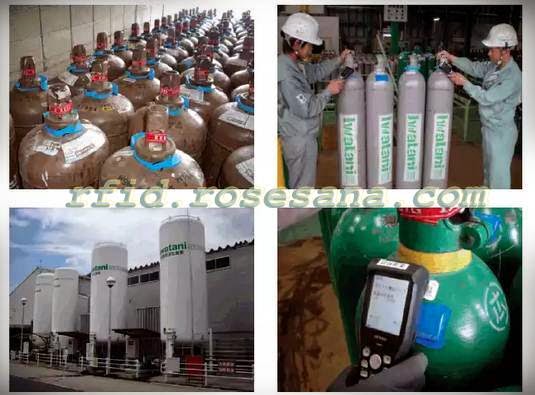
Insiders know , reading, writing and data into the cylinder takes a lot of time workers . On top of this , during the reception process , filling, transportation and track repeatedly . In addition, about 10% of manual entry is incorrect . In a business that depends on the exact track of each cylinder , errors may result in the loss of the cylinder becomes faster ; productivity and performance on the bottom line of huge losses had a negative impact .
Barcode and related tracking technology has been in use for some time . Barcode is handicapped because it has been deemed to have been read. In harsh industrial environments, the barcode becomes unreadable due soon or cutting the soil cover or oil . The greatest challenge to the use of the bar code , the bar code can be easily copied , so that the physical location of the integrity of the cylinder unreliable .
Ultimately, this lack of assets and can not easily be found lacking when the relevant assets are most in need
of information of the latest results of its operating status data readily available .
RFID ( radio frequency identification ) technology , through a unique chip components , it is small , has no moving parts to replace it overcomes obstacles barcode. Digital microchip embedded a unique identifier , so that the label is extremely unique , no one can fake readings assets associated with it . Since the RFID tag does not need a direct line of sight which is embedded in the case of impact resistance to withstand a high protection in industrial conditions is difficult and extreme environments. Mud and oil does not interfere with reading .
RFID tags have many years of life. RFID technology uses a RFID reader ( start signal and a radio receiver) passive RFID tag (with metal noise resistant) hear back signal. When pulling the trigger in RFID reader , the tag is read and provides a unique identification code. This makes it possible to track assets.
Issues faced by industrial gas companies
- Underutilization of cylinders due to the inefficient and inaccurate tracking methods in use today.
- Difficult to differentiate between customer-owned, dealer-owned and company-owned cylinders.
- Difficult to determine which cylinders are due for scheduled maintenance and testing.
- The damage/pilferage of a cylinder cannot be identified and attributed to a specific customer or delivery.
- Effort in identifying cylinders increases the time of operation and lost productivity.
- Cylinder audit or census is extremely difficult as companies have to dig up records to locate the company-owned cylinders.
- Reconciling discrepancies in customer's and company's cylinder holding records.
- The accounting procedure in the present system is time consuming since the dispatch and warehouse officers have to upload the record of each customer manually after deliveries. This may also result in errors that are difficult to track.
- The present system doesn’t offer a fool-proof check for preventing the wrong gas to be filled in the cylinder. This is a major safety issue.
- Cylinders which are condemned, or identified as lost or stolen are not reported in the system which leads to inaccuracy in records.
Benefits of RFID in Cylinder Tracking
- Real time visibility of stocks & location of cylinders.
- Accurate information with less effort & lower labor costs.
- Cylinders can be tracked on the dock, at a customer site, at fill plants, at testing facilities, or at other distributors.
- Warehouse cylinder stocks can be counted in a fraction of seconds.
- Time to time maintenance of cylinders improve efficiency & avoid unplanned maintenance which increases revenues by reducing the turnaround time.
- Complete history of the cylinders that helps to identify the cylinders age which are due for test & assures the complete safety to the workers & customers.
- Simplify the process of delivery process by saving time, reducing errors and enhances the customer satisfaction.
- Decrease in lost cylinders or cylinders credited to the wrong account. Greater efficiency in inventory used and ordered.
- Able to prevent pilferage/theft of cylinders.
- Updating the cylinder details like shipment, cylinder return into the system eliminates any possible error.
Conclusion
Advanced Cylinder Tracking System provides excellent process control, cylinder --
management automated tracking with less errors thereby increasing efficiency in the
overall functioning of the system. RFID implementation provides improved asset
visibility to the gas suppliers and manufacturers and hence can be used to make
decisions on the supply. The benefits of an RFID implementation to the gas cylinder
industry are measurable. Automation of the process improves overall accuracy, allows an
efficient use of assets, enables a faster turnaround of inventory, increases employee and
customer safety, reduces cylinder loss and enhances the customer experience. The
companies can gain competitive advantage by adopting this technology at its nascent
stage.
Wednesday, December 18, 2013
Tuesday, December 17, 2013
3 new mirroring site
Since 2013 December 16th we're glad to announce 3 new mirroring site:
- http://robots.webatu.com ( mirroring http://robot.rosesana.com)
- http://arduino.atspace.com ( mirroring http://arduino.rosesana.com)
- http://rfid.atspace.com ( mirroring http://rfid.rosesana.com)
Wednesday, September 18, 2013
randomize selected product
After a couple week trial, we launch randomize selected product, enjoy for your convenience only.

Tuesday, August 27, 2013

Monday, July 29, 2013
Our RFID Total Solutions
RFID.ROSESANA.COM focuses on the application of RFID technology in various aspects, not only to Access Control applications, but also in other creative and innovative applications beyond imagination. (5 minutes video about RFID)
It has been our motive to explore the possibilities of RFID in our daily life. More and more fascinating applications are waiting to be discovered, explored and solved with minimum cost but high gain impact for you.

We provide the following RFID Applications and System Integration for:
- Access control/security Access control
- Integrated Application for Education / Institution
- Time and attendance
- Personnel tracking / monitoring
- Laundry tracking
- Automatic Library management
- Electronic tracking of hard-copy document
- Payment /ticketing /Automated Fare Collection
- Parking and toll payment systems
- Garment applications
- Retail applications
- Jewelry Management
- Asset tracking / Management / Gas cylinder management
- Container/large-asset tracking
- Parts/tools identification and tracking
- Vehicle tracking/ Identification
- Inventory control and Management
- Warehouse management / Real Time Locating system
- Shipping and receiving
- Supply chain tracking
- Logistics management
- Baggage handling
- Product identification/sorting
- Quality-control tracking
- Work-in-process tracking
- Business case development/analysis
- Business process reengineering
- Micro payment
- Ticketing
- Livestock identification
- Pet identification
- Medical applications/Medical data gathering to keep track on the patient's record
- Anti counterfeiting
- Anti-shoplifting, Electronic Article Surveillance (EAS)
- Military applications
- Other/Anything that need their own electronic identification / management.
Friday, July 26, 2013
RFID application : AFC System for Bus
Logistics and transportation are major areas of implementation for RFID technology. Yard management, shipping and freight and distribution centers use RFID tracking technology. In the railroad industry, RFID tags mounted on locomotives and rolling stock identify the owner, identification number and type of equipment and its characteristics. This can be used with a database to identify the lading, origin, destination, etc. of the commodities being carried.

In commercial aviation, RFID technology is being incorporated to support maintenance on commercial aircraft. RFID tags are used to identify baggage and cargo at several airports and airlines.
Some countries are using RFID technology for vehicle registration and enforcement. RFID can help detect and retrieve stolen cars.
 |
| Automated fare collection flow |
Transportation payments
In many modern countries, RFID tags can be used to pay for mass transit fares on bus, trains, or subways, or to collect tolls on highways.
Some bike lockers are operated with RFID cards assigned to individual users. A prepaid card is required to open or enter a facility or locker and is used to track and charge based on how long the bike is parked.
The Zipcar car-sharing service uses RFID cards for locking and unlocking cars and for member identification.
 |
| Realtime data Capture |
Automated Fare Collection System
In the operation of bus line, the reloading terminal will be installed in the bus terminal or a station for top-up. Also, all the buses will install a Bus Validator for fare collection. Cardholder will buy a card and top it up at the reloading station by paying cash to Load Agent.
Cardholder has a user card which allows them to perform any payment at Bus Validator. All the transaction records will be stored in the Bus Validator. At the end of the date, acquirer will collect all the transaction records and upload to backend host via data concentrator. Finally, the backend host will consolidate all the transactions and Service Provider can review the report and process the settlement.
Other option but need more cost, Bus Validator which equipped with GSM/CDMA transmitter can directly transmit transaction record just at once, that called realtime AFC system
 |
| Wireless 2.4gHz data capture |
The System Software
The system is a cash stored value system for public bus fare payment. People can charge their
AFC bus card with value at the recharge place and use it to ride bus equipped with bus validator to their desired destination.
People who wishes to ride on a bus, presents his(her) RFID card to the Bus validator .
On a bus, the system will charge the fare that was determined for that bus route by deducting the purse
of RFID card as well as recording the transaction on both the card and the validator.
The transaction data stored at the validator shall be gathered at Data Collection at bus depot either in 2.4GHz or 433mhz or tap by external portable memory . After data collection, Data Collection will transfer the data to the Clearing Center Server for money clearing.
 |
| Wireless 433mHz data capture |
The Benefit
• Up-to-Dated Technology : Using contact-less technology both for single and multi fare method.
• High Speed Process : The passengers feel more convenient because of faster transaction speed.
• Low Maintenance Cost : Contact-less card solution doesn’t require so many moving mechanism and has simple structure to minimize the maintenance.
• Extendibility : In the future, the system can be extended for other application in connection with other equipment.
• International Standard High Security : applied highly secure international standard for system security.
• Easy Data Management : Powerful clearing software enables efficient & powerful data management for accounting and statistics.

Bus validator Specification:
• Recognizes RF (Radio Frequency) without any contact
• Supports RF Card in compliance with ISO14443 type A & B
• Specially designed to resist continuous vibration in the worst road condition
• Reduction of maintenance cost due to no mechanically moving components
• Dual Back-up of transaction data for safety
• USB port or (433MHz/2.4GHz)Wireless Communication with Data Collection or usb flash disk (Optional)
Data Collection / Data Management System Specification:
• Data collection via 433MHz/2.4GHz communication or USB memory
• Powerful software enabling efficient & powerful data management for accounting and statistics
• Data Storage
• Data back-up function

We provides AFC system for micro payment for land transportation including bus, minibus, rail, ferry, road toll, parking, drive thru fast food, convenience stores, even your own project, Which aims to enhance the efficiency of fare collection by escalating and expanding your customer, increasing transaction speed, reducing operational costs and satisfyingly both of your customer and YOU.
This article in Bahasa Indonesia:
This article in Bahasa Indonesia:
Subscribe to:
Posts (Atom)